
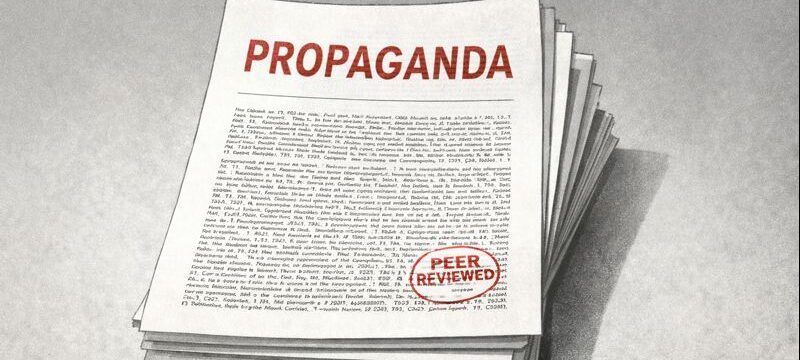
A country can survive criticism. But it cannot survive contempt disguised as education.
That difference matters—because criticism strengthens a civilization by exposing what is weak. Contempt weakens a civilization by teaching its own children to hate the very thing that sustains them.
And contempt is exactly what American Studies has been doing in its treatment of America.
The January 22, 2026 Wall Street Journal piece, “American Studies Can’t Stand Its Subject,” by Richard D. Kahlenberg and Lief Lin, was shocking—not because it revealed that academic writers criticize America (they should), but because it suggested something far worse: that a flagship journal, American Quarterly, has begun to resemble a courtroom where the verdict is written in advance and the only remaining task is to gather evidence.
Evidence is not scholarship when the conclusion is fixed.
At that point, it stops being study and becomes propaganda with footnotes.
The Journal’s authors analyzed nearly 100 articles from American Quarterly—the flagship journal of the American Studies Association—over a three-year period (2022–2024). Their finding was astonishing: 80% of the articles were critical of America, 20% were neutral, and none were positive. Not one.
Think about that.
A discipline called American Studies—published in a journal produced by and for professional scholars—managed to examine America for three full years without finding one aspect of its subject worthy of admiration.
That isn’t nuance.
That isn’t balance.
That is an intellectual pathology.
America Is Not Innocent.
America Is Exceptional.
Before anyone reaches for the emergency “patriotism” alarm, let’s be clear: America is not a saint. It has blood on its hands, like every nation that has ever held power. Countries have failures. Countries have hypocrisies. Countries have sins.
But history is not a morality play.
History is conflict. History is domination and resistance. Expansion and contraction. Survival and extinction. Ebb and flow.
Power always wins—until another power does. Always.
So when power shifts, the losers do not receive a prize for virtue. They are conquered.
That is not cynicism. It is the oldest truth in human affairs, and it is not limited to America.
So if your entire “study” of America is that America used power and benefited from power, therefore America is evil—you are not reading history. You are inventing it.
 America is great not because it is innocent, but because it achieved something rare: it built a system strong enough to become powerful—then disciplined itself to change.
That is what the Constitution did and does.
Not a love letter.
An architecture — a design for power with limits on itself.
A nation saying: we will be strong, but we will place limits on strength—limits made of laws.
This is hardly weakness. It is an achievement rare in world history.
The Missing Half of the Story
The Journal piece notes something profound: readers can learn plenty about America’s moral failings but “nothing about its virtues.”
That is not simply an editorial preference. It is a philosophical choice — a decision about what qualifies as knowledge.
If America produces prosperity, that’s “capitalist extraction.”
If America wins wars, that’s “imperial violence.”
If America welcomes immigrants, that’s “labor exploitation.”
If America cures disease, that’s “scientific supremacy.”
Notice the trick.
Every positive outcome is reframed as a negative. Do that long enough, and you stop teaching people how to think and start teaching them what to think.
That is not scholarship. That is narrative control. Propaganda.
According to the Journal’s summary, the articles focused heavily on racism, imperialism, classism, sexism, and xenophobia. Those are real subjects. They deserve study.
But they are not the entire story.
Where were the articles examining American ingenuity?
Where were the analyses of why the country became a magnet for immigration?
Where were the explorations of the most innovative economy in modern history?
Where was serious inquiry into why the United States holds an extraordinary share of Nobel Prizes relative to its population?
A civilization cannot be understood by its crimes alone. If you refuse to examine its strengths, your picture of that civilization is not critical — it is distorted.
The Psychological Problem: Gratitude Has Been Banned
The deeper problem here is not political. It is spiritual.
The Journal describes a “lack of gratitude” among scholars who benefit from American liberty while depicting America primarily as oppressive.
Gratitude is an uncomfortable concept in modern intellectual culture because it implies obligation. But gratitude is not obedience.
Gratitude is honesty.
A truthful scholar should be able to say, at minimum: the very freedom I am using to condemn this country is one of the country’s central achievements.
A scholar who cannot admit that is not impartial.
He is compromised.
How Do You Hate a Subject and Still Be Fair?
Consider a simple test.
If the subject were France Studies, could a leading French journal publish three years of content with no positive portrayal of France?
If the subject were Women’s Studies, could the leading journal publish three years with no admiration for women?
If the subject were Black Studies, could the leading journal publish three years with no recognition of Black achievement?
Of course not.
It would be recognized as prejudice, not scholarship.
So why is this acceptable when the subject is America?
Because in elite culture, contempt for America has become “the thing to do.” It signals belonging.
And that is why American Studies can publish what it publishes with a straight face. It is no longer functioning as a field of inquiry, but as a field of moral preference.
America Is Great Because It Learns
America’s story is not one of perfection. It is a story of correction — slow, imperfect, often painful, but real.
The Declaration of Independence established a moral claim about human equality so powerful that it became a weapon used to force America to live up to its own ideals. The Constitution created a mechanism that allows not only national power, but internal self-repair.
Civilizations collapse for two reasons:
- they become weak and are conquered, or
- they become corrupt and rot from within—and then are conquered.
America became powerful — that is why it survived.
America built a self-critical engine into its institutions — that is why it keeps surviving.
That is greatness.
Not the kind that makes you comfortable.
The kind that makes you uncomfortable enough to keep trying, keep changing.
The Real Cost of Teaching Contempt
The Journal reports polling suggesting many young people now view America’s founders more as villains than heroes.
That should concern anyone who cares about the future.
If you feed a generation an unbroken diet of national shame, you produce citizens with no gratitude, no pride, and no willingness to sacrifice.
History does not care what you believe.
Power does not care what you believe either.
If children are taught to loathe the civilization that protects them, they will not defend it when pressure comes. They will not rebuild it when it cracks. They will not help it when it is vulnerable.
They will simply inherit comfort, despise what produced that comfort, and lose both.
Adapt, change, or disappear.
A discipline that cannot stand its subject is not merely distorting knowledge. It is eroding the civilizational confidence required to survive in a world still governed—and always governed—by power.
Power struggles with other power, including itself.
And that is the brilliance of the Founders: they understood that, and built a document designed to limit power—even their own.
The most honest description of what we are seeing in this journal, as cited by the Wall Street Journal, is this:
Not scholarship.
Propaganda with footnotes.
___________________________________________________
Citations Note: All references to publication trends in American Studies are drawn from the January 22, 2026 Wall Street Journal essay “American Studies Can’t Stand Its Subject,” which was adapted from the policy report The Distortion of American Studies by the American Identity Project and the Progressive Policy Institute.
To what extent does focusing almost exclusively on America’s flaws in academic studies risk turning scholarship into “propaganda with footnotes,” and how can scholars maintain a balanced, nuanced perspective?
Very interesting question. I would suggest that if do that – focus only on flaws – you miss the big picture. Like people are complex (you can’t really explain people with a couple of adjectives), a country’s Zeitgeist (“spirit of the times” usually referring to dominant intellectual, cultural, and moral climates) are almost impossible to determine without opening up you lens wider than flaws. To maintain a balanced perspective, scholars have to “erase their blackboard” as John Locke taught us, and as I continually hammer in my essays. That means you can’t be “moved” by a trend, or by noise. It’s hard, but that’s my take. What do you think?